
Filter
907
Featured
46
21
Language
Document type
487
78
77
50
42
38
35
30
28
20
10
5
4
3
Countries
89
18
13
11
10
9
9
9
8
7
6
6
5
5
4
4
4
4
3
3
3
3
3
3
3
3
3
3
2
2
2
2
2
2
2
2
1
1
1
1
1
1
1
1
1
1
1
1
1
1
1
1
1
1
1
1
1
1
1
1
1
Authors & Publishers
Publication Years
Category
103
52
27
15
12
10
4
Clinical Microbiology and Infection Volume 21, Issue 5, May 2015, Pages 433-443;
The neglected zoonotic diseases (NZDs) have been all but eradicated in wealthier countries, but remain major causes of ill-health and mortality across Africa, Asia, and Latin America. This neglect is, in part, a conse
...
011 - Biogeochemical Cycles
In this video Paul Andersen explains how biogeochemical cycles move required nutrients through the abiotic and biotic spheres on our planet. Matter on the Earth is conserved so producers must receive required nutrients through the water cycle, carbon cycle, nitrogen c
...

Environmental Research Letters
Microplastic debris floating at the ocean surface can harm marine life. Understanding the severity of this harm requires knowledge of plastic abundance and distributions. Dozens of expeditions measuring microplastics have been carried out since the 1970s, but they ha
...
Briefing Note no. 80 November 2015
Promoting health and well-being throughout Europe

This is a book about community-based research in the service of improving the sustainability and equity of safe water production, consumption, and management at community level in rural Uganda. It provides an account of the findings of a five-year combined social science, natural science, and engine
...
Antimicrobial resistance (AMR) represents a major threat to human health with significant global economic and security implications. In 2015, WHO Member States unanimously approved a Global Action Plan to tackle AMR (GAP-AMR). The goal of GAP-AMR is “to ensure, for as long as possible, continuity
...
This guidance document is designed to ensure that the process of iteratively managing the health risks of climate change is integrated into the overall National Adaptation Planning (NAP) process, including through assessing risks; identifying, prioritizing, and implementing adaptation options; and m
...
Arbeitsblätter zum Globalen Klimawandel. Mit den vorliegenden Materialien können die SchülerInnen die Verknüpfung der Themenkomplexe Ernährungssicherheit und globaler Klimawandel erarbeiten. Diese in einer sich zunehmend globalisierenden und ständig wandelnden Welt verstärke
...
Aktuelle Themen und perspektiven für eine gesundheitsfördernde stadtentwicklungWeltweit nimmt die Urbanisierung zu: Inzwischen lebt mehr als die Hälfte der Weltbevölkerung in Städten, in Europa sind es deutlich mehr als 70% der Bevölkerung (WHO, 2010a). Aufgrund die
...
Read the full manifesto: http://www.thelancet.com/journals/lan...
Sign the manifesto: http://bit.ly/1cQReJ0
#PlanetaryHealth
This manifesto for transforming public health calls for a social movement to support collective public health action at all levels of society. Our aim is to respond to
...
Within an Australian context, the medium to long-term health impacts of climate change are likely to be wide, varied and amplify many existing disorders and health inequities. How the health system responds to these challenges will be best considered in the context of existing health facilities and
...
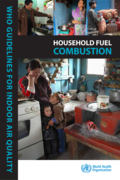
Energy use in the home is a vital and ubiquitous feature of human society. Energy
is used for a wide variety of purposes, including cooking, space heating, light-
ing, small-scale income generation, various household tasks, and entertainment.
Providing improved water supply to low-income urban communities is a difficult challenge faced by water utilities throughout Africa and Asia.
This guide provides an introduction to available options for serving these communities.
The guide draws on sector experience in general, and more particular
...
PlosOne December 10, 2014 https://doi.org/10.1371/journal.pone.0111913
Plastic pollution is ubiquitous throughout the marine environment, yet estimates of the global abundance and weight of floating plastics have lacked data, particularly from the Southern Hemisphere and remote regions. Here we re
...
PNAS | March 4, 2014 | vol. 111 | no. 9
Malaria is an important disease that has a global distribution and significant health burden. The spatial limits of its distribution and seasonal activity are sensitive to climate factors, as well as the local capacity to control the disease. Malaria is also
...
